VOURAIKOS VALLEY
The Ultimate Low-Level Experience
Europe's Ultimate Low-Level Flying Experience
Hidden deep within the mountains of northern Peloponnese lies one of Europe’s most spectacular low-level flying locations. Every spring, Hellenic Air Force crews transform the Vouraikos Valley into a breathtaking stage where precision flying, rugged landscapes and unforgettable photography come together.
Location
Greece
Aircraft
Lockheed Martin F-16 Fighting Falcon
Dassault Aviation Mirage 2000
McDonnell Douglas F-4 Phantom II
& many more…
Operator
Hellenic Air Force
Photographers
Robert Kysela
Taylor Peake
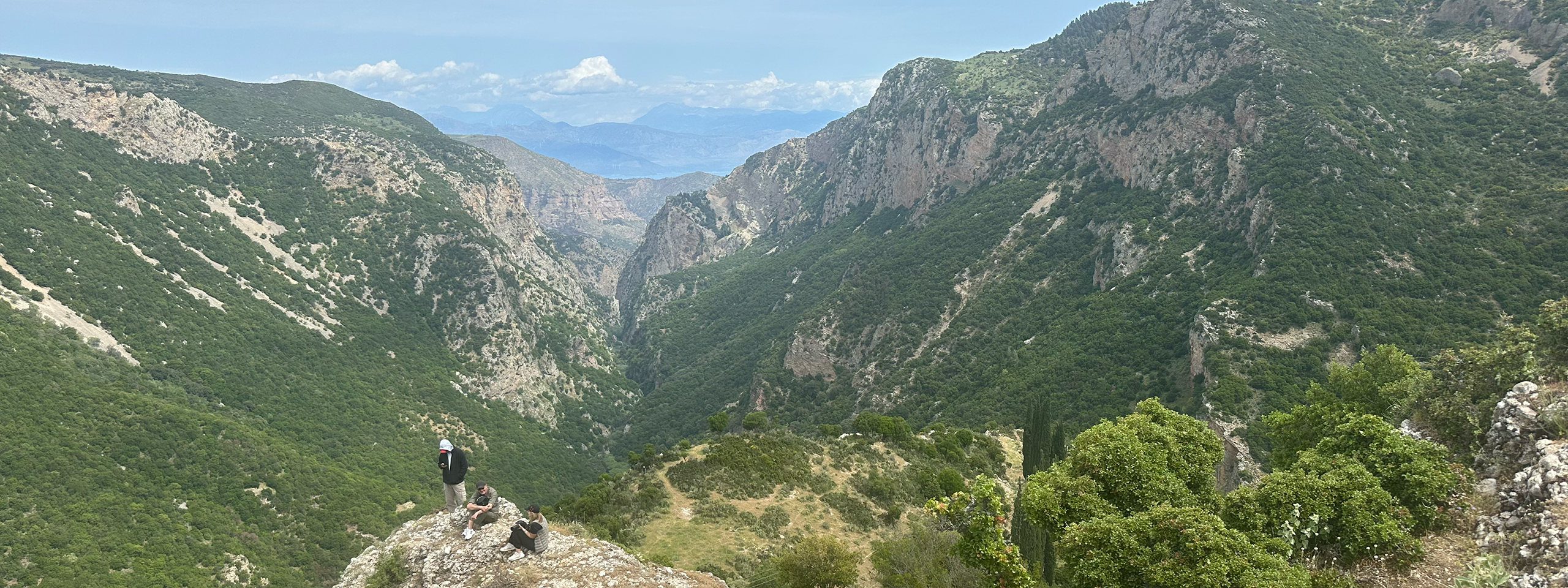
From above, the Vouraikos Valley appears almost peaceful. Hidden beneath its steep limestone ridges lies one of Europe’s most demanding low-level flying routes.
The Operational Role of Low-Level Flight
At first glance, low-level flying may seem like little more than spectacular aviation. In reality, it remains one of the most demanding and operationally relevant skills in modern combat aviation. Flying at high speed through narrow valleys requires precision, situational awareness and absolute trust between pilot and aircraft.
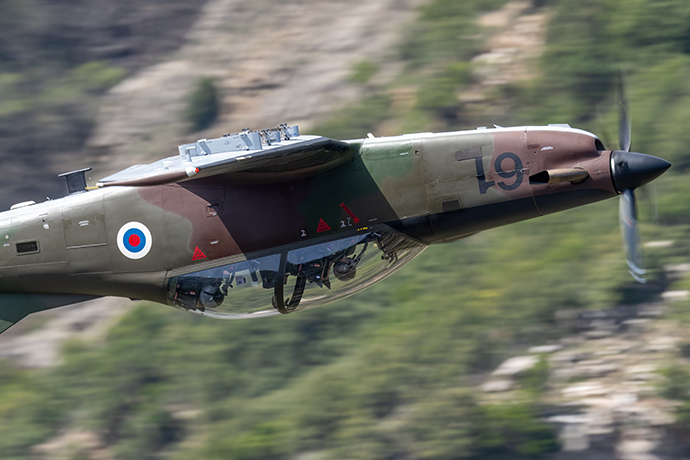
Pilatus PC-9
Slovenian Air Force – Vouraikos Valley, Greece
© Robert Kysela
“Flying low isn’t about flying fast. It’s about surviving.”
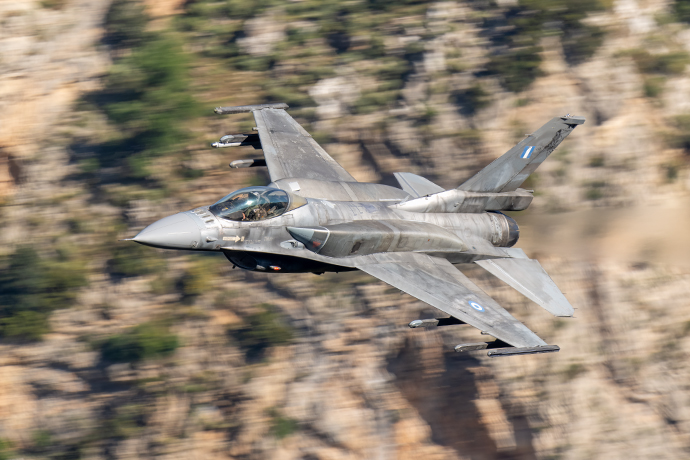
Lockeed Martin F-16C Fighting Falcon
Hellenic Air Force – Vouraikos Valley, Greece
© Robert Kysela
Beyond the Hollywood Myth
Since the release of Top Gun: Maverick, extreme low-level flying has become familiar to a much wider audience. The film captures the intensity, speed and visual drama of terrain-following flight with remarkable effect. Yet the mission profile shown on screen is deliberately compressed and exaggerated for cinematic impact.
In reality, sustained flight through a narrow and highly winding valley at near-transonic speed would leave almost no margin for correction. Reaction times would shrink to fractions of a second, turn radii would increase dramatically and both aircraft and crew would be exposed to extreme structural and physiological loads. Operational low-level flight is therefore not defined by maximum speed, but by control, precision and survivability.
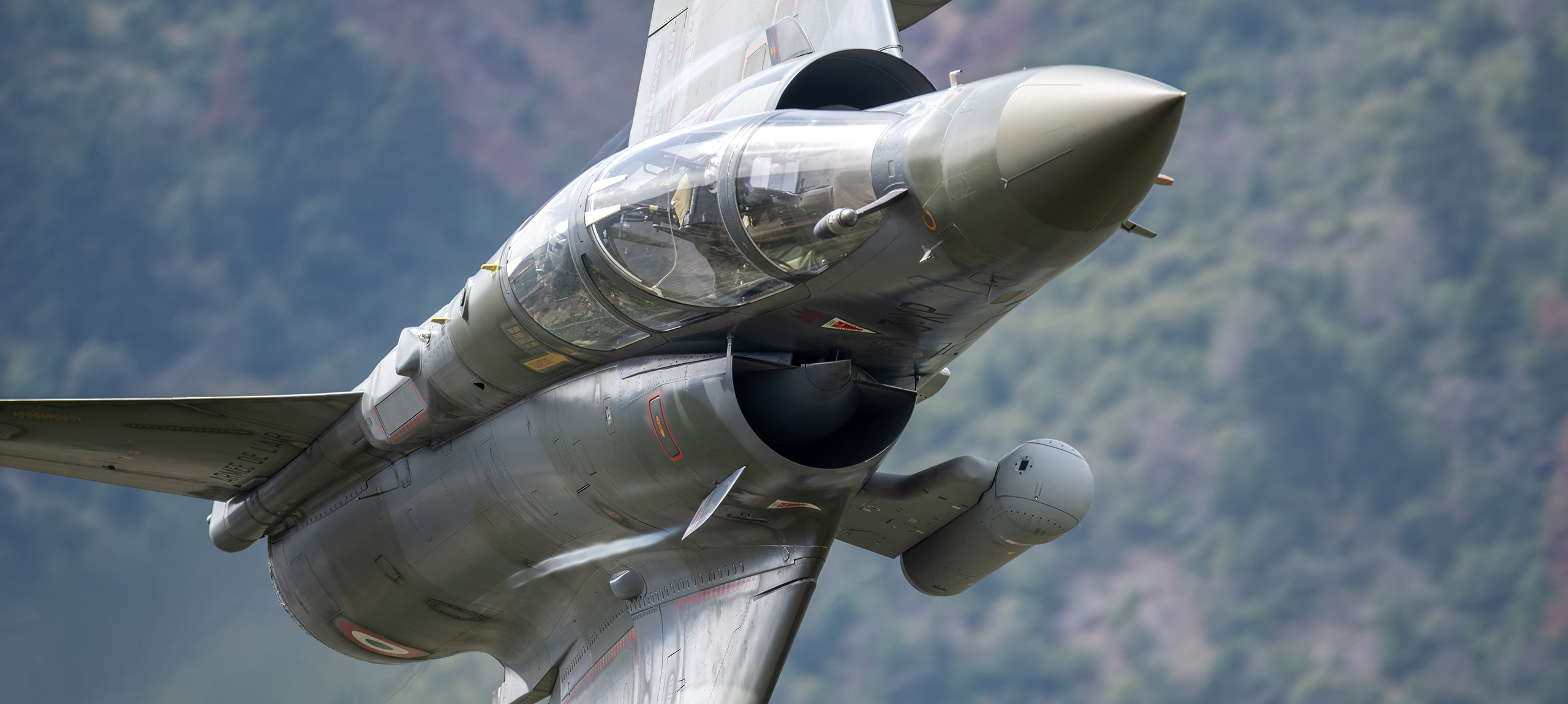
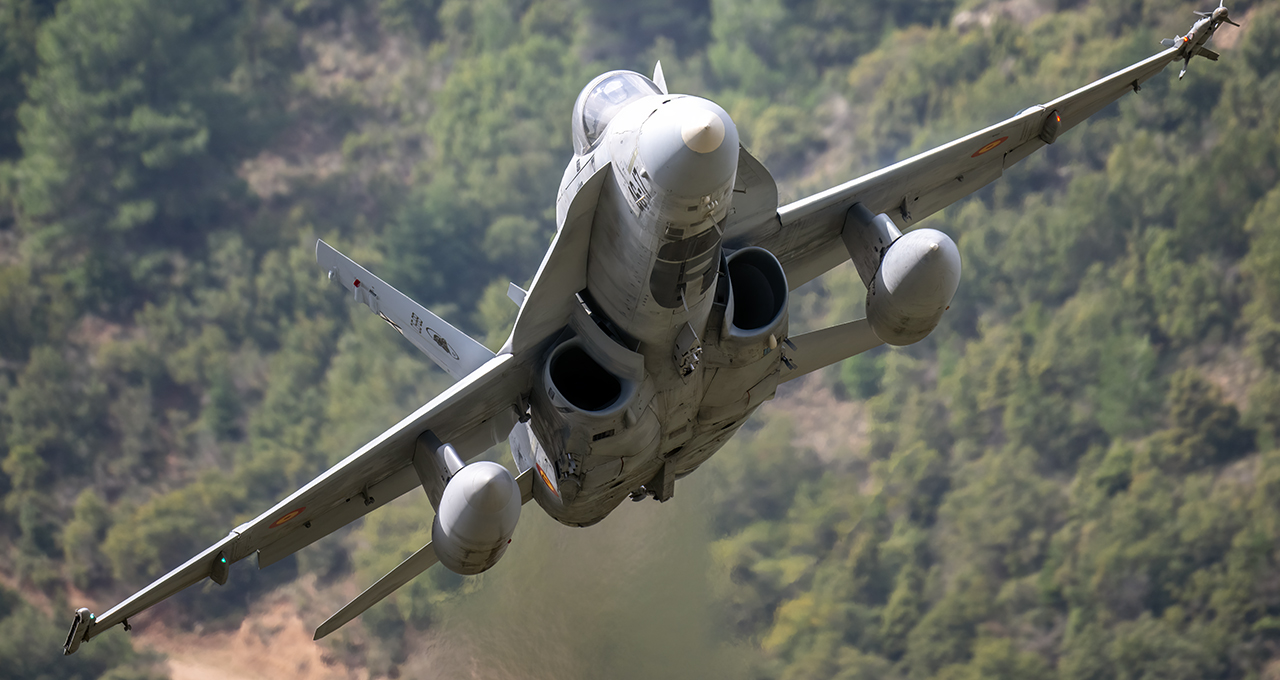
Boeing EF-18M Hornet
Spanish Air Force – Vouraikos Valley, Greece
© Robert Kysela
Low-Level Flight as a Tactical Tool
Modern low-level flight is not about spectacle – it is about survival. Flying close to the terrain allows combat aircraft to exploit natural cover, delay radar detection and reduce exposure to hostile air defence systems. Valleys such as Vouraikos provide an ideal environment for crews to refine these skills under realistic conditions, where every turn, every altitude change and every decision must be executed with absolute precision.
Rather than rehearsing a fixed route, pilots train to adapt continuously to unfamiliar terrain. The objective is to develop instinctive aircraft handling, maintain situational awareness under extreme workload and preserve tactical flexibility. In operational terms, low-level flying remains one of the most demanding and most valuable skills in modern combat aviation.
Flying the Valley
Flying through Vouraikos is far more than simply following the terrain. Every pass demands continuous concentration, rapid decision-making and complete confidence in both aircraft and pilot.
Crews constantly adjust altitude, speed and bank angle while maintaining visual references in an environment where the landscape leaves little room for hesitation. Unlike cinematic portrayals, there are no rehearsed camera angles or scripted manoeuvres—only disciplined flying built on years of training.
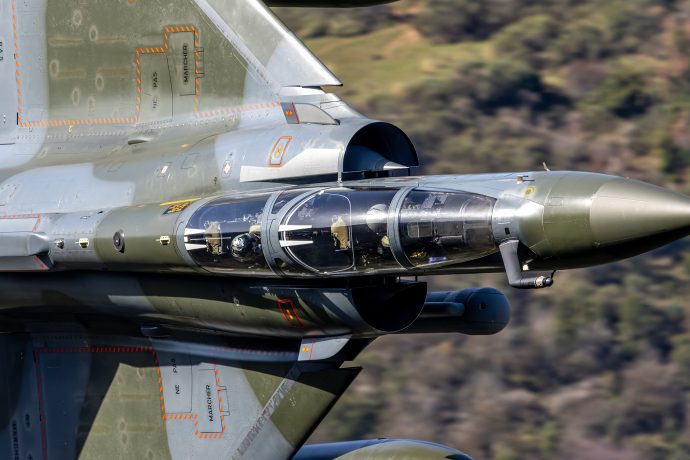
Dassault Aviation Mirage 2000D
Armée de l’Air et de l’Espace – Vouraikos Valley, Greece
© Taylor Peake
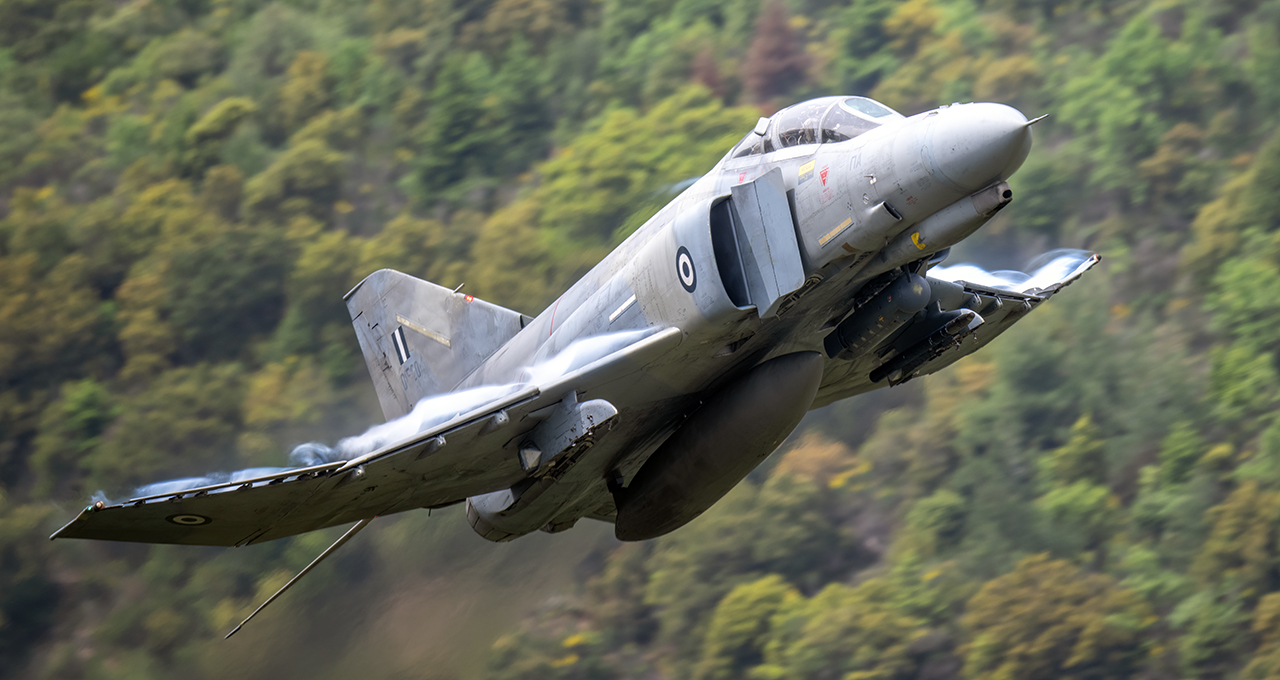
McDonnell Douglas F-4E Phantom II
Hellenic Air Force – Vouraikos Valley, Greece
© Robert Kysela
Experience the Full Story
Discover the complete Vouraikos Valley feature with exclusive photography, operational insights and behind-the-scenes reporting from one of Europe’s most demanding low-level training environments.